By Desrae Clarke
A solitary, large, graceful white bird of 80 to 90cms, the Yellow-billed Spoonbill, can be observed in shallow water on the edges of our river. Its bill is long, strong and broad with the flat spatulate-shape at its extremity.
The bird slowly side-sweeps its open bill to catch the small fish, water insects, crustaceans, molluscs and frogs which comprise its diet.
The male and female birds are similar, with the bill of the male slightly longer.
At time of breeding, the Yellow-billed Spoonbill develops dainty plumes growing from the lower throat and breast. It also develops a small red facial patch at the base of the bill and a fine black line on the edges of the pale grey facial skin.
It has a yellow eye, bill and legs; however, the legs and feet have black joints.
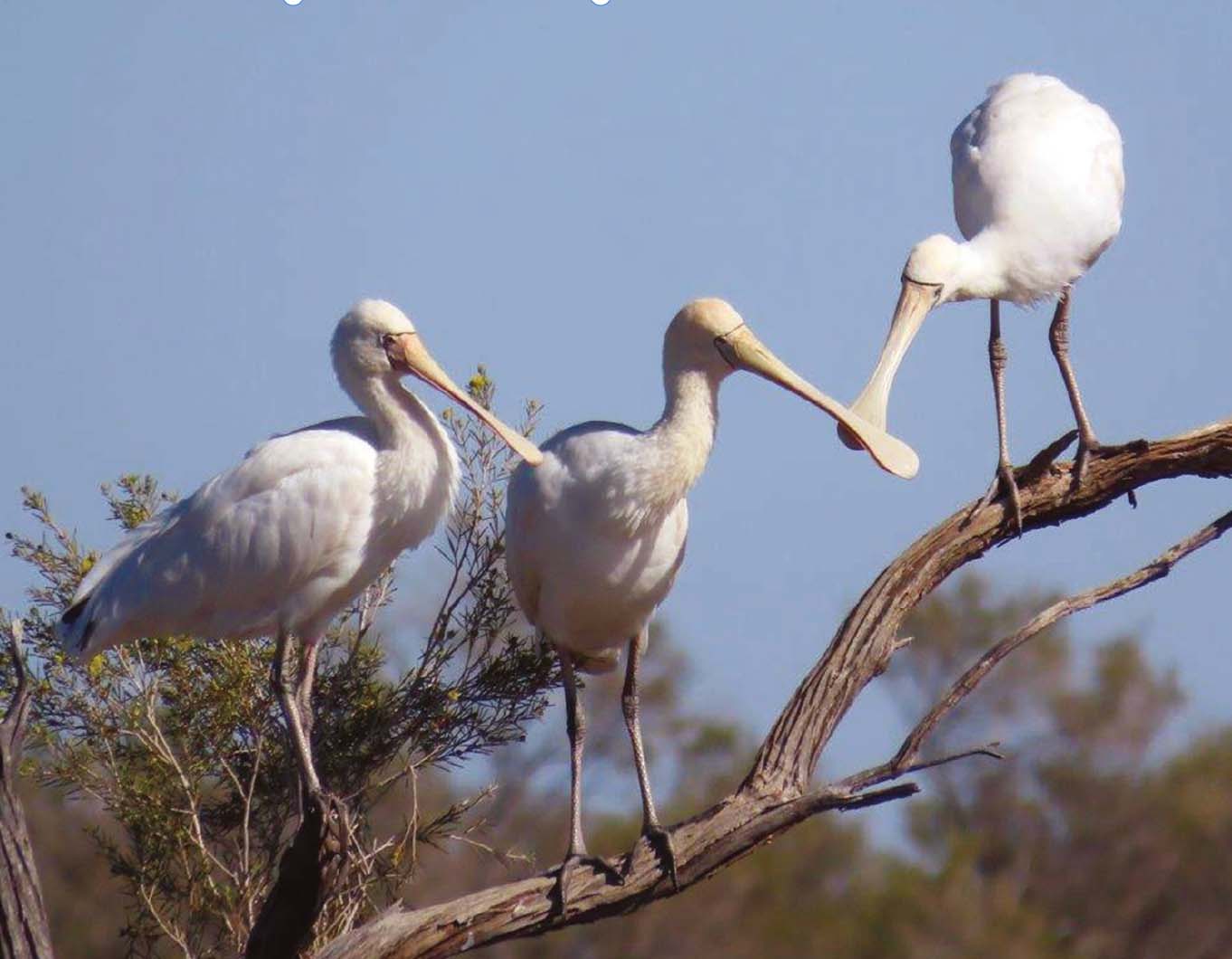
Yellow-billed Spoonbill. Photo by Lyn Johnson.
The Yellow-billed Spoonbill breeds in the southern areas of Australia from September to January. Its nest is a platform of sticks lined with small leaves or twigs placed over water at up to 20m from the ground in either the foliage of a live tree or on the branch of a dead one. It may also make a nest on flattened rushes in swamp areas, with birds returning to the nesting area year after year. Two to three matte white eggs are laid, with both parents incubating for twenty to thirty days. The young leave the nest to roam nearby at approximately four weeks. By the age of seven weeks, the young are able to fly and will follow the adults to feeding places.
The Yellow-billed Spoonbill flies with its neck outstretched with strong, steady, but shallow, wing beats.
It is usually a quiet bird but has a call that is a feeble, seedy grunt or a clapping of the bill if threatened.
The Toodyay Naturalists’ Club welcomes sightings and observations of flora, fauna and all areas of natural history. To add your sightings, email secretary@toodyaynats.org.au or submit a sighting via our online form.